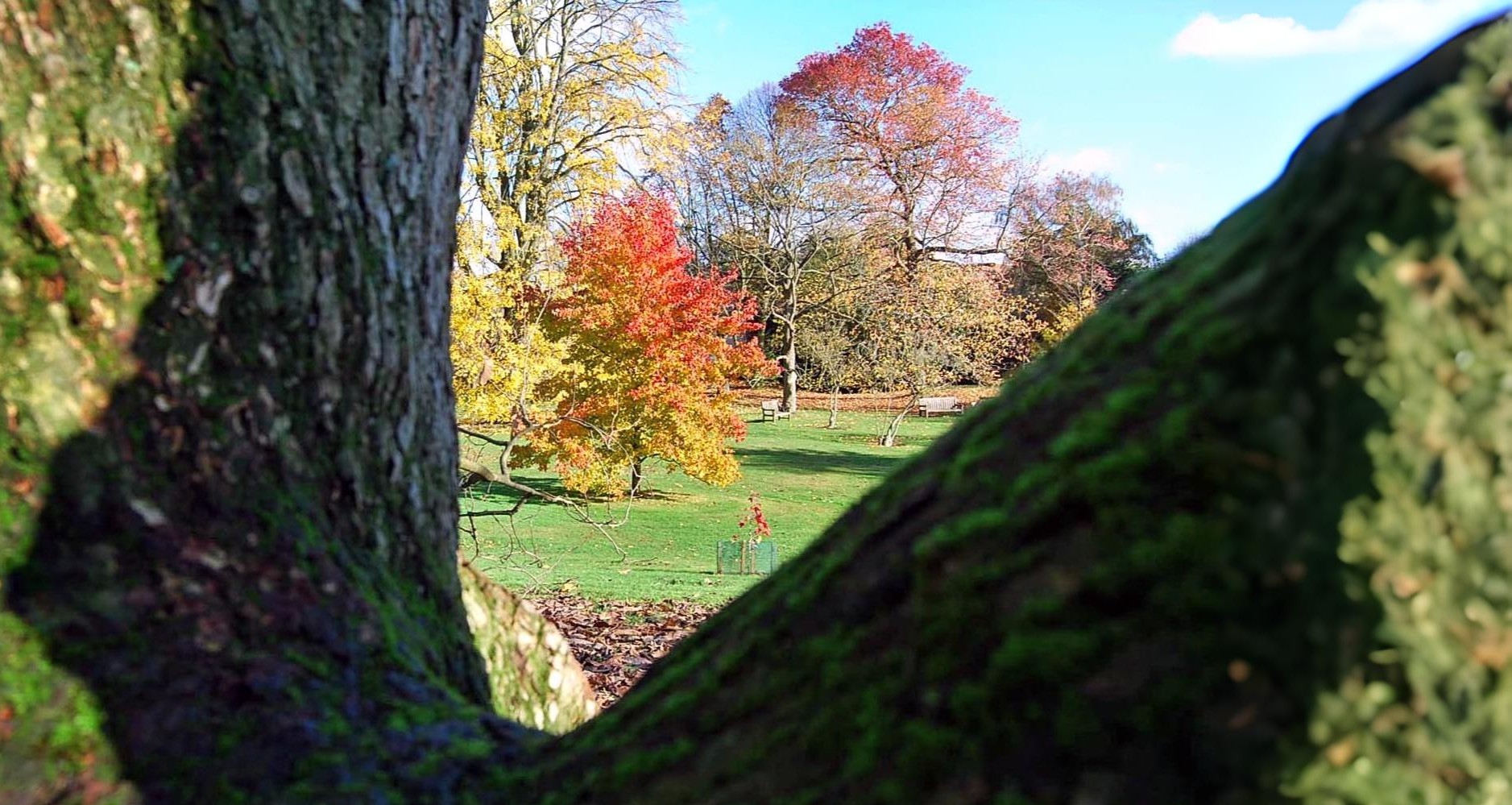
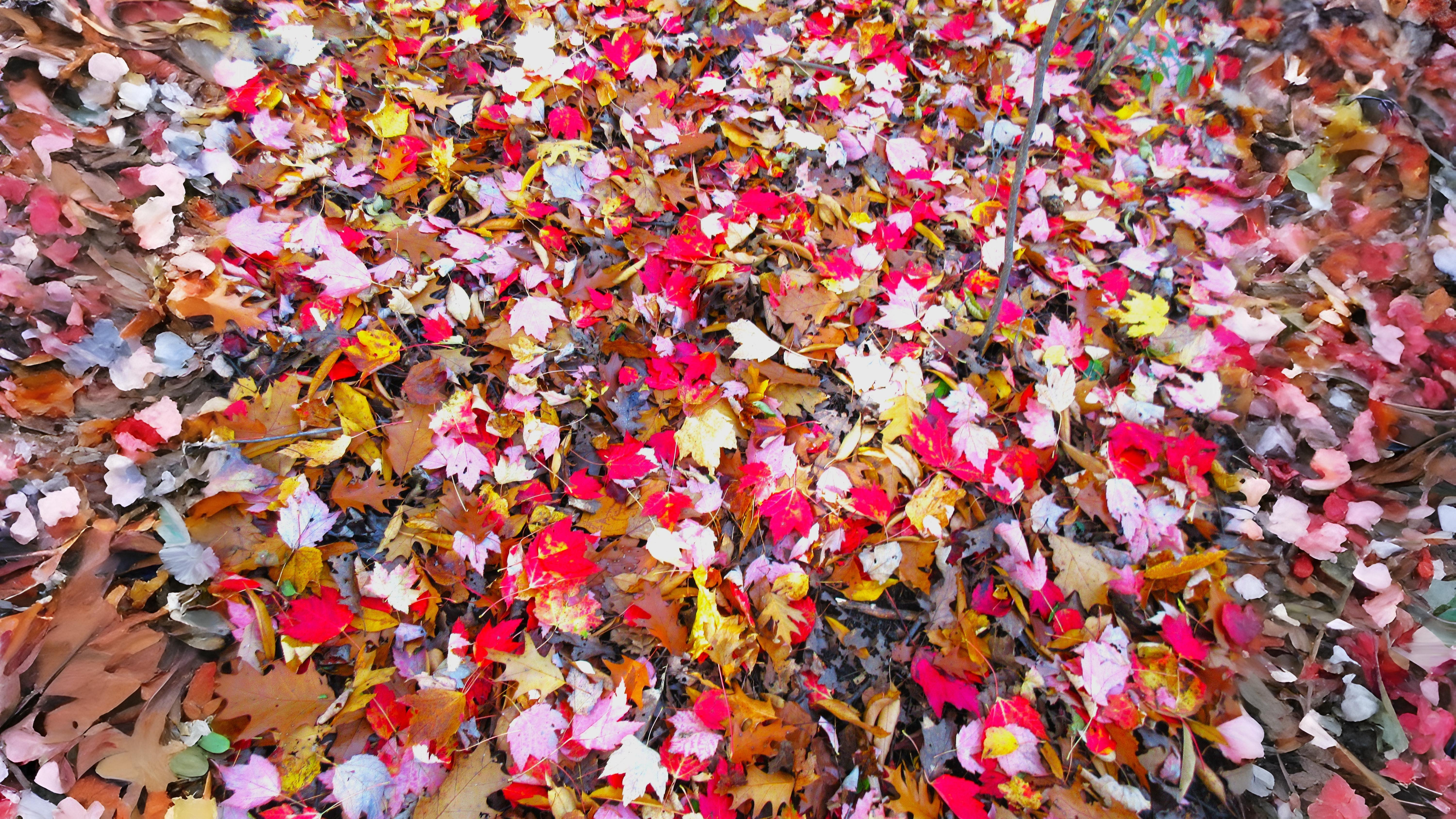
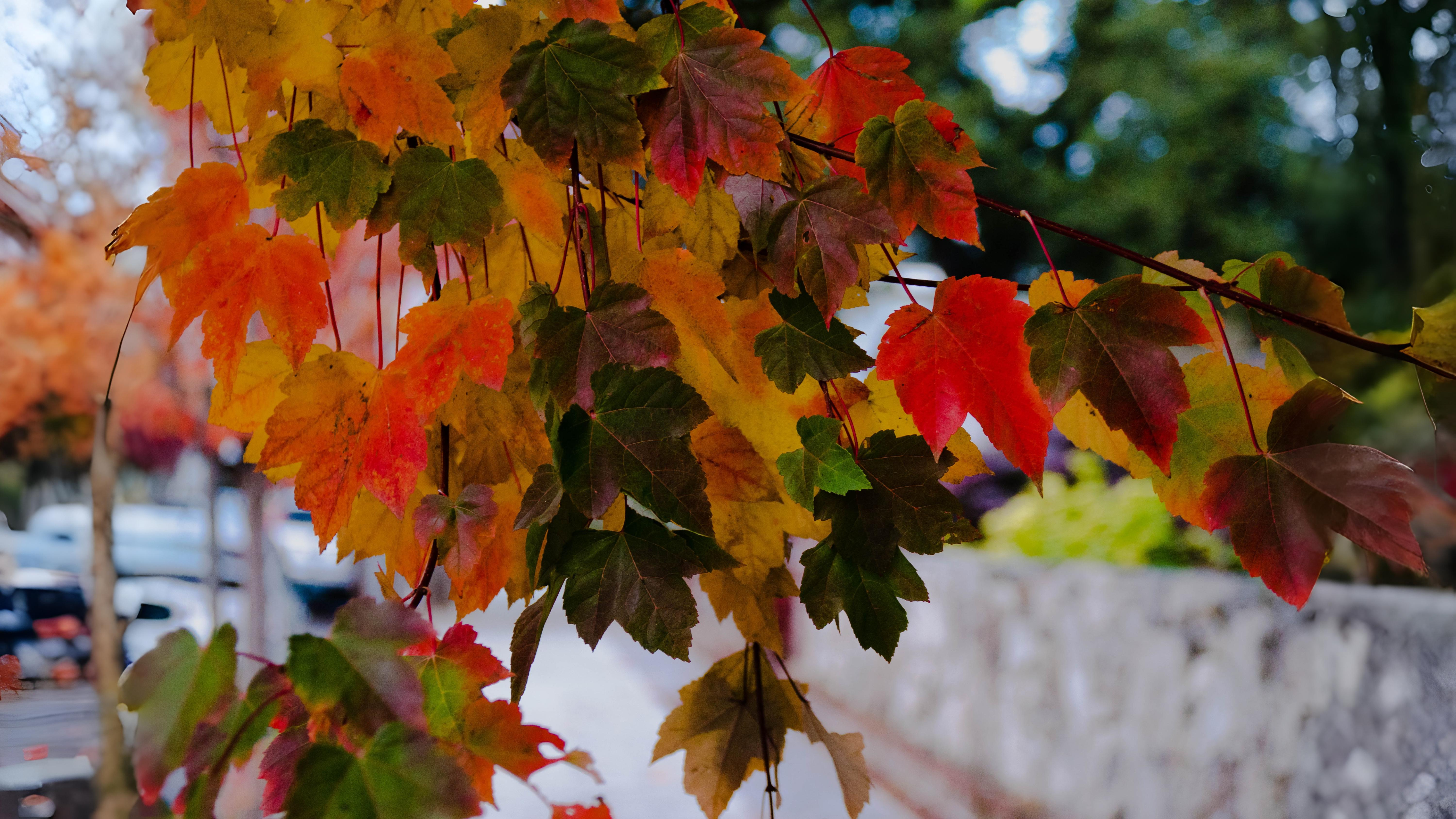
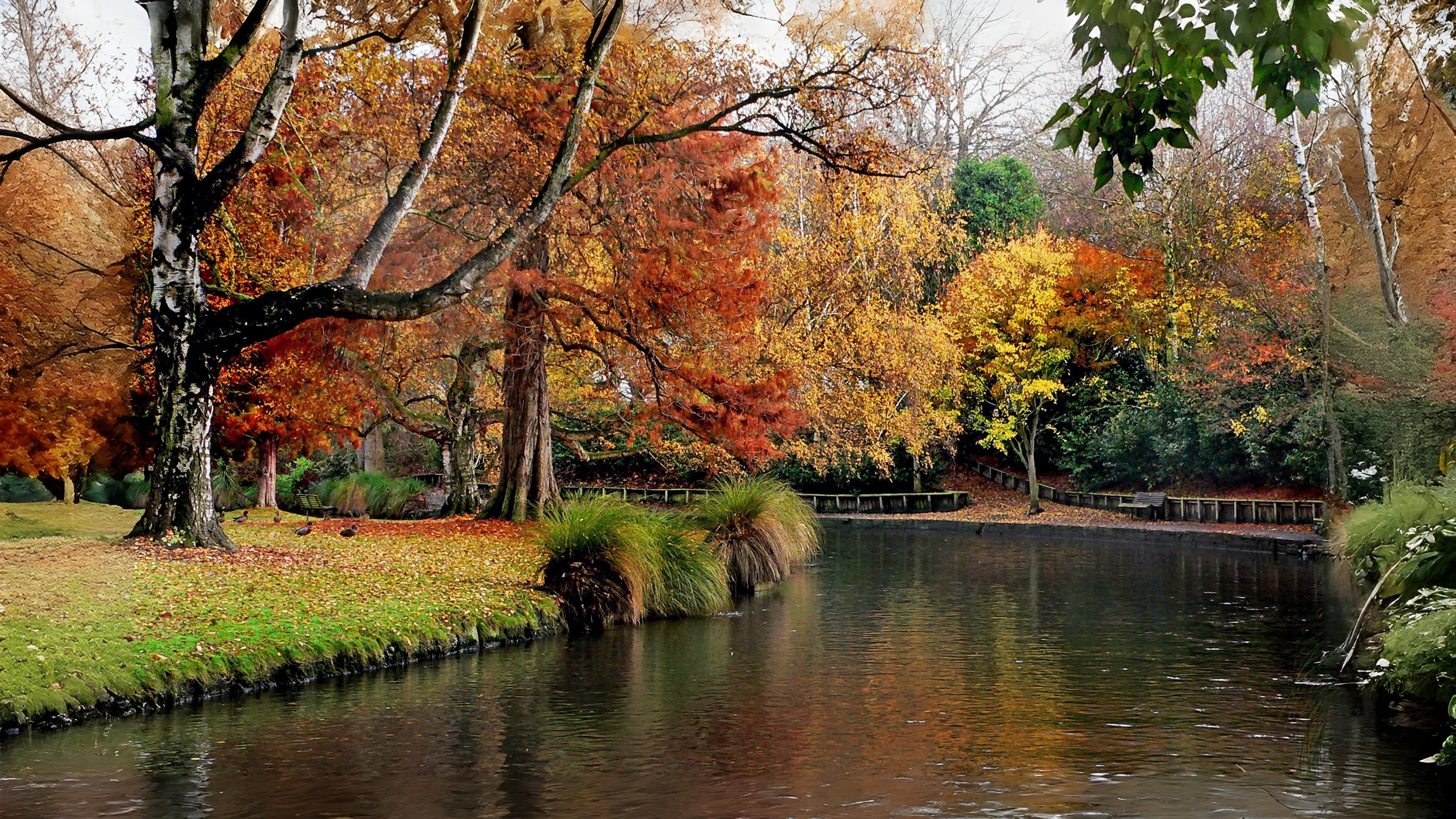
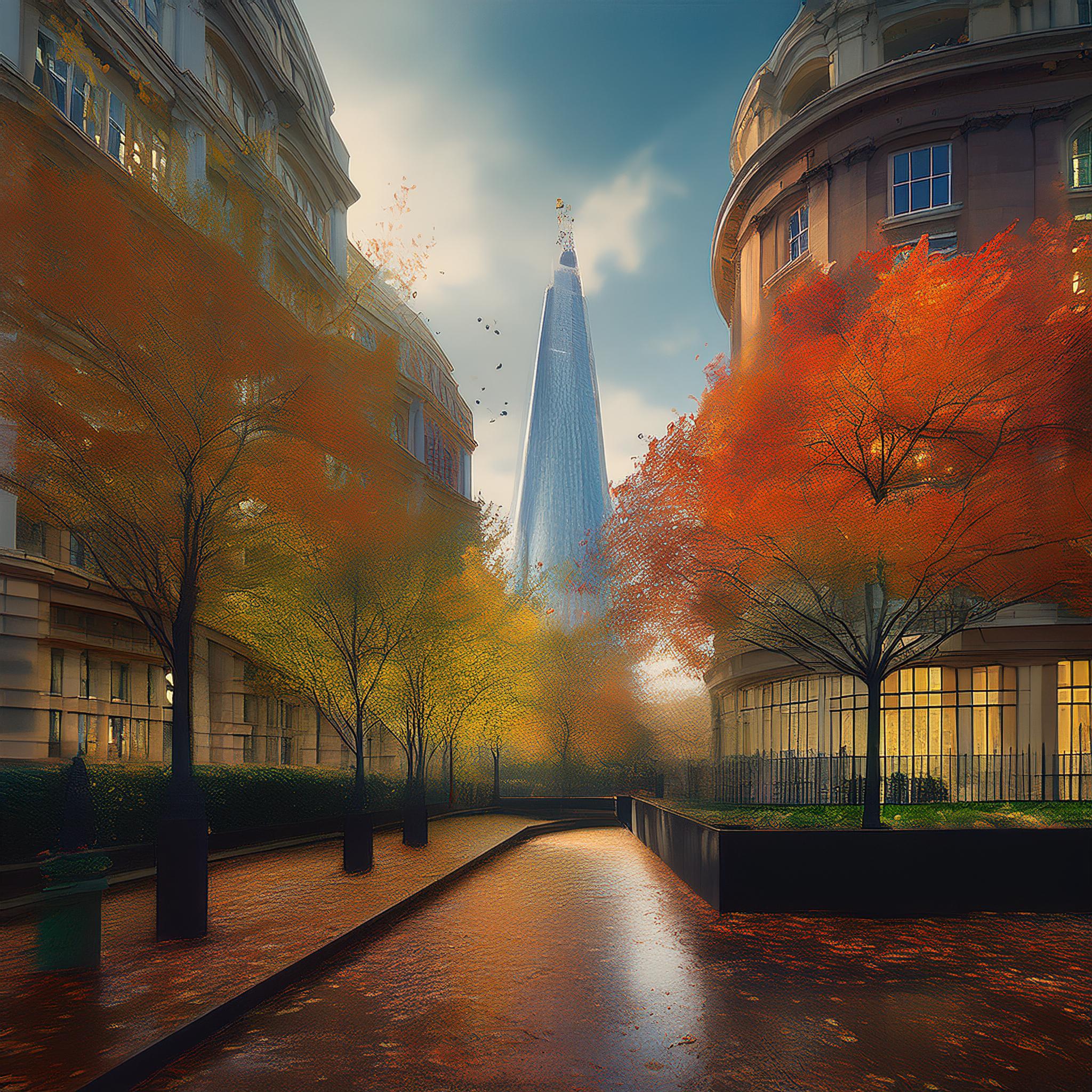
By mid-October, London’s trees put on the most spectacular show of the year. From the fiery crimsons of cherries and sweetgums to the shimmering yellows of limes and elms, every corner of the city transforms into a living canvas of autumn colour. Some trees dazzle with multiple hues on a single leaf—reds, oranges, golds, even peach—while others glow like burnished bronze or marmalade orange against bright scarlet berries. Parks such as Syon, Greenwich, and Cannizaro offer breathtaking displays of rare and exotic species, while streets and gardens boast Japanese maples, cherries, and sweetgums bred for maximum impact. Even familiar species like chestnuts, birches, and poplars surprise with their shifting palettes. Mid-October is truly nature’s grandest performance—don’t miss it.
Article
Tree colours in mid October
The most dramatic period of colour change in the whole year occurs in mid October. A calm, sunny period is to be hoped for so that leaves fall slowly and silently from trees and their colours have had time to develop fully. In 1981 the great hurricane occurred in October instantly removing this entire spectacle. The landscape on the outskirts of London seems to change very little during this part of the month as so many of our wild trees are late to colour, with the exceptions of our wild cherries and field maples. However, in London’s streets, parks and gardens quite the reverse is true as so many strains, hybrids and cultivars of trees have been bred by gardeners for maximum autumn impact.
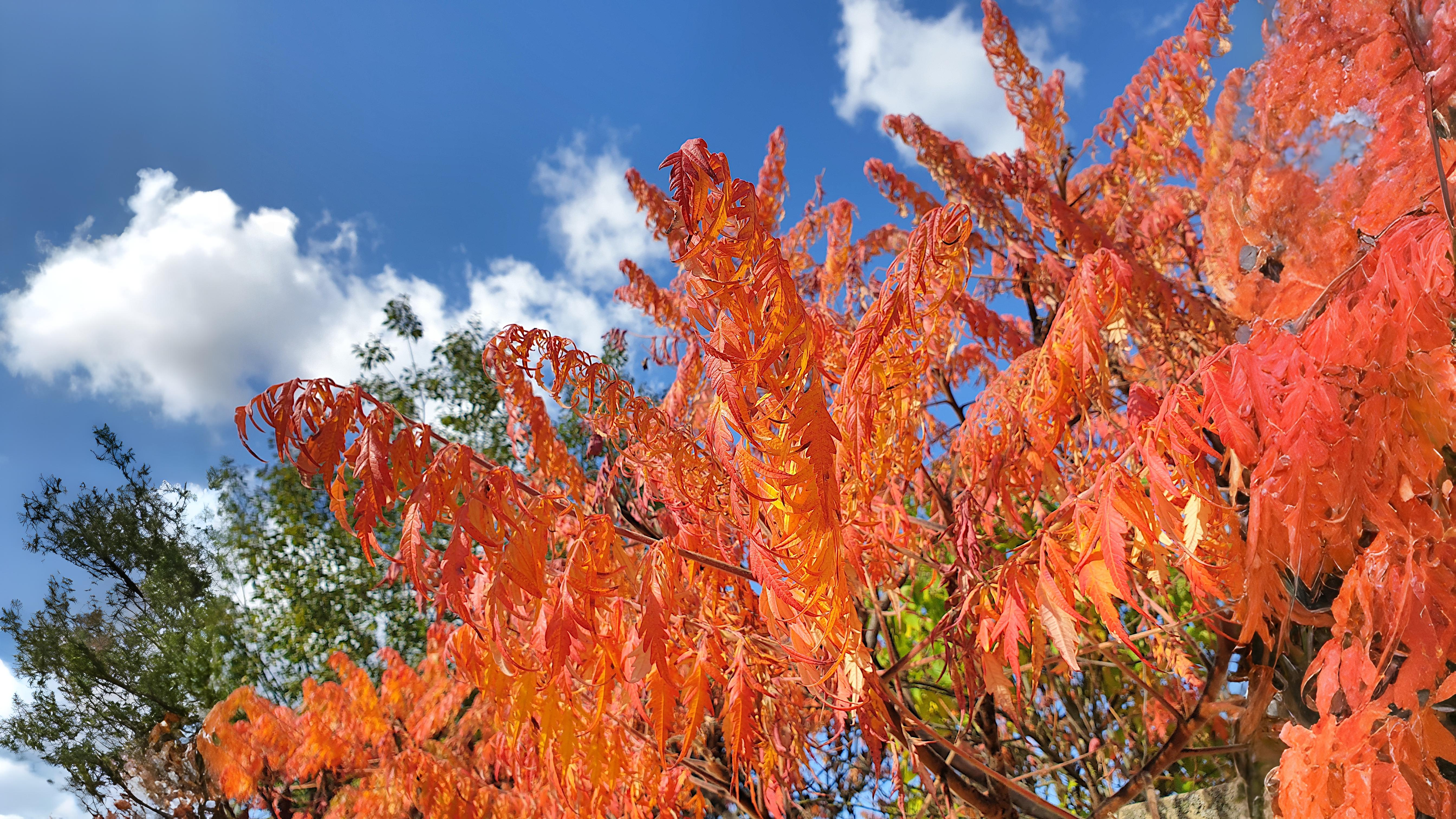
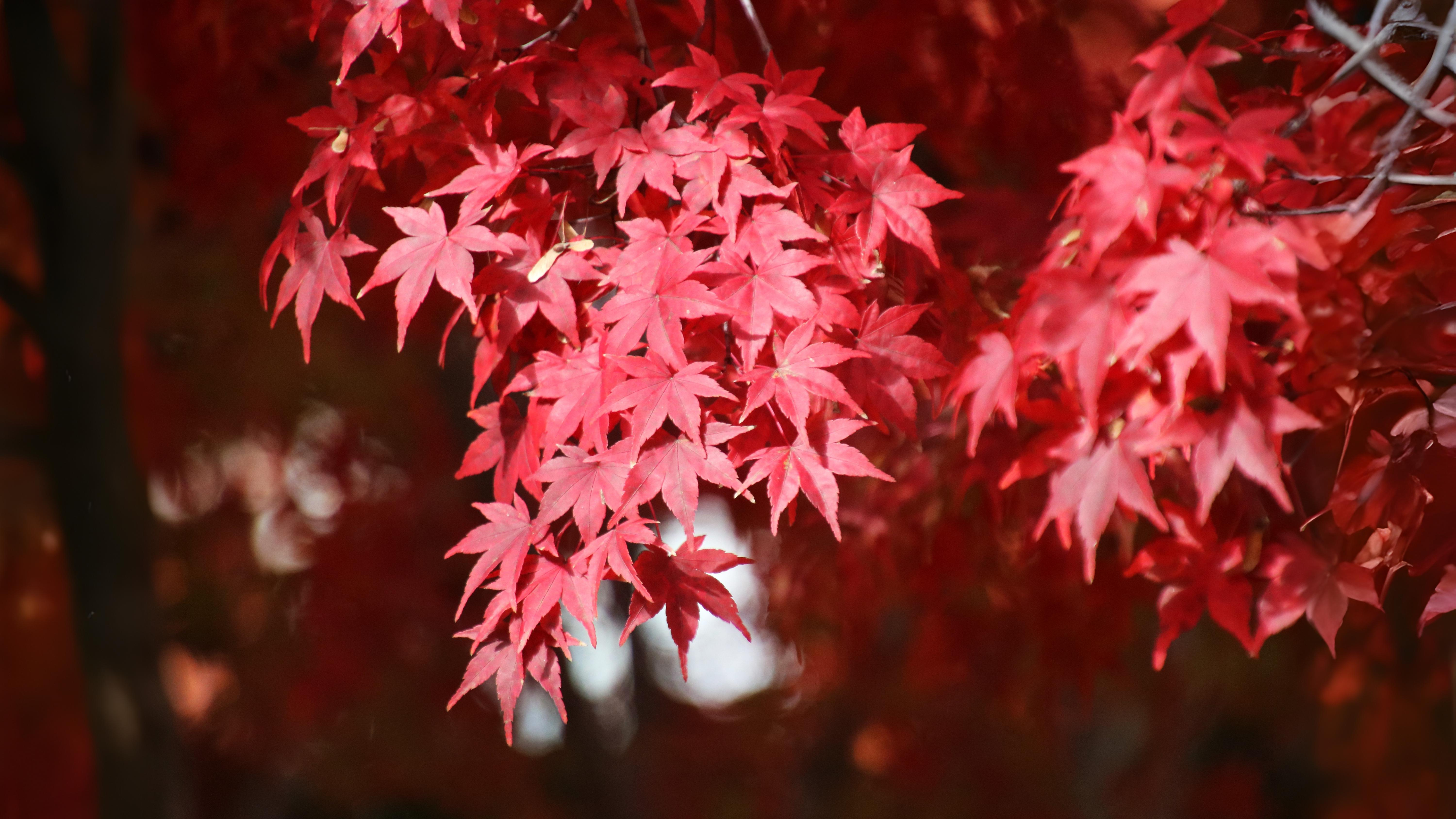
Stag’s horn Sumac, Cappadocian maples and Cockspur thorns continue to remain colourful with the latter even producing leaves that can be completely scarlet one side of the midrib and yet egg yolk yellow on the other. Japanese maples often have highly coloured petioles and other bright colours at the edges of their winged seeds. In contrast, the leaves of our most common maple, the sycamore, are just getting more and more blotched in appearance and may even by now have dried, withered edges. Many common horse chestnuts look even uglier now due to leaf miner infestations, although trees less affected manage to turn either a nut brown or a tawny yellow.
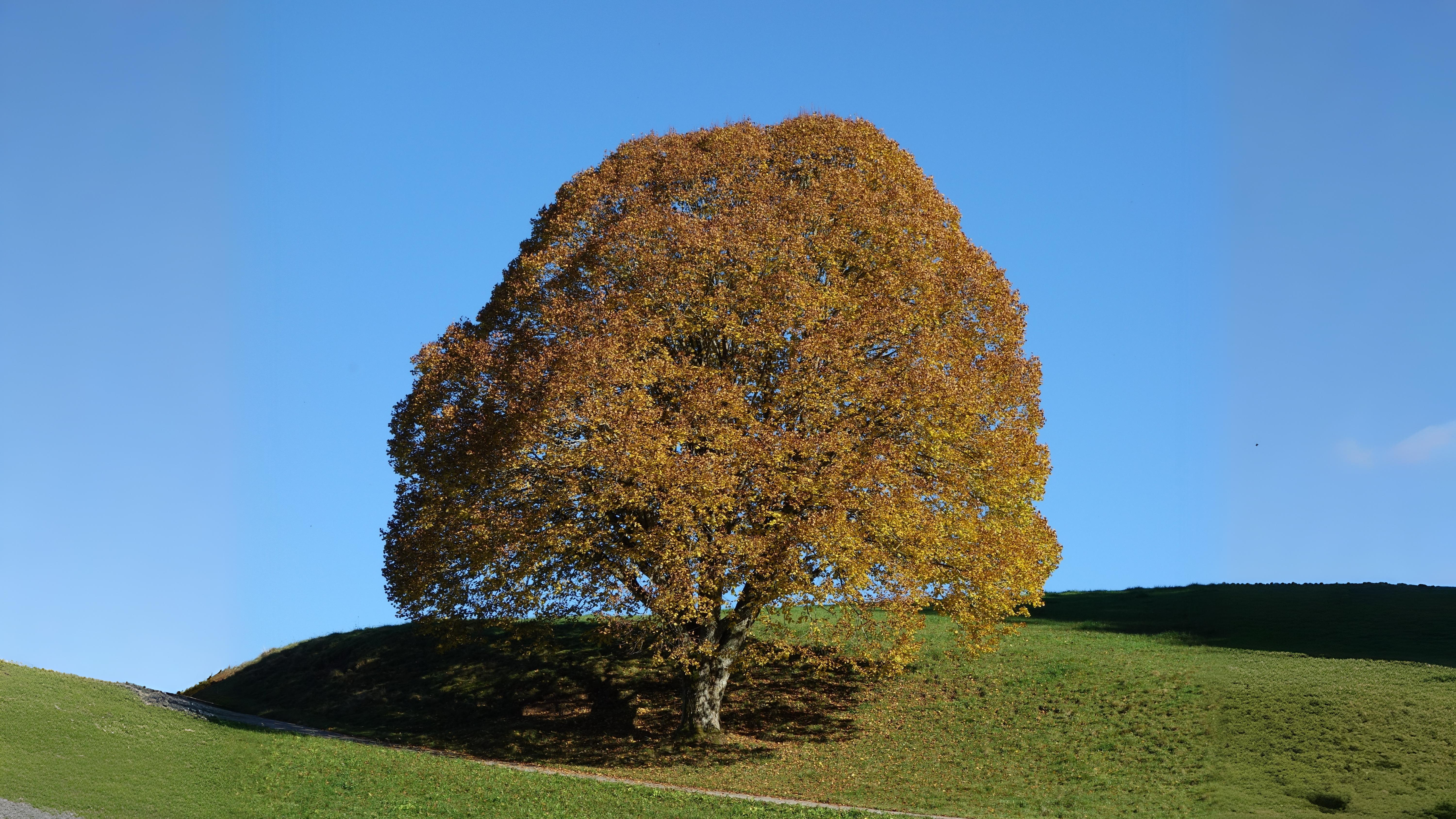
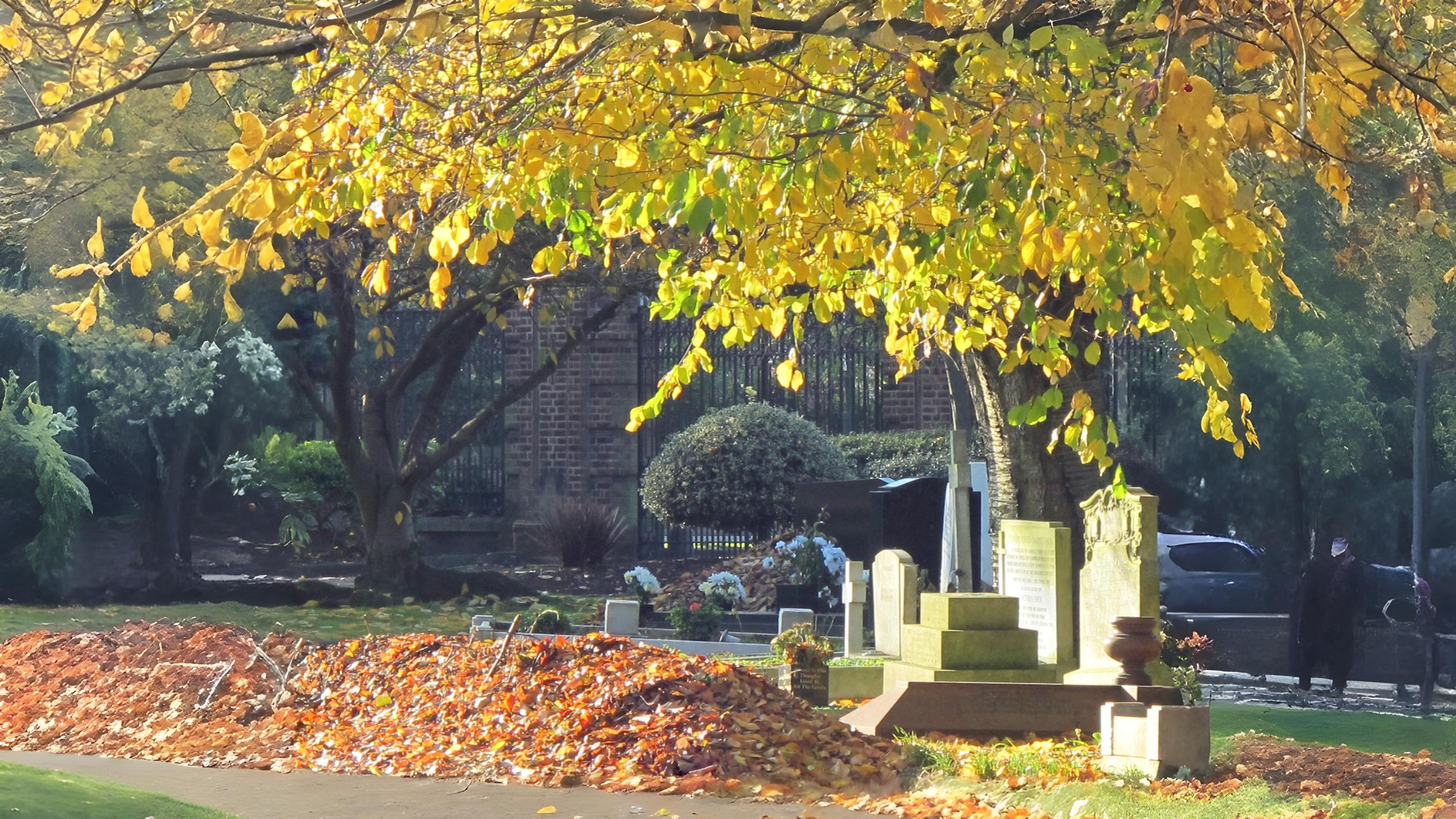
There is also now a slow general yellowing of many different elms and limes. This makes lime avenues, such as the one in Syon Park, almost as attractive as they were when their leaves first emerged in the spring. Smaller amounts of yellow are creeping into many birches and whitebeams. Some hornbeams are already almost the colour of mustard. Rather than yellowing, trees such as acacias, nettle trees and various willows as well as poplars just tend to get more dappled in appearance. Poplars vary a lot in this respect, some getting dappled all over in yellow and green whilst others turn a pale bronze and even rows of identical Lombardy poplars can look inexplicably quite different from each other. Red horse chestnuts continue to exhibit some unusual bronze, metallic colours but occasionally raspberry and cream are included.
The brightest and most attractive colours that tend to get noticed at this time are produced by the cherries, sweetgums and Japanese maples. Other impressive trees worth seeking out are whitebeams in Ruskin Park, hickories in Greenwich park, the Golden birch in the Isabella plantation and the Pride of India facing the main gate at Abney Park cemetery. There is a staggering number of hybrids and cultivars of cherries. The most colourful ones we see now are often crosses between Sargent’s cherry Prunus sargentii and the Yoshino cherry P. yedoensis. These hybrids are capable of producing every shade imaginable of pink, red, brown, green, orange, rose and peach. Several different shades can even be found on a single leaf. For many, the Sargent’s cherry is the most beautiful autumn cherry of all.
Professor Sargent found it on the island of Yezo in Japan in 1892 where it was called O-yamazukura or the great mountain cherry. Hybrids with the Yoshino cherry such as ‘Pandora’, ‘Hillieri’ and ‘juddii’ are all very popular. Other cherries we see derived from the Fuji cherry P. incisa tend to have more oranges and crimsons and Hokusai, originally selected by Captain Ingram, or ‘Cherry Ingram’ as he was called, is another favourite. Some of the best coloured forms have been collected together in the Savill gardens.
Rarer cherries noted for their leaf colours include the bright red Sand cherries P. pumila and P. besseyi as well as the Korean Hill cherry P. verecunda which can be found in Syon park. Even the overplanted milky pink spires of ‘Accolade’ go a copper yellow now and the equally popular ‘Shirofugen’ turns a deep copper yellow. Some of the purple-leaved cherries almost turn the colour of porphyry. Meanwhile, our own native wild cherry P. avium along the sides of the North Downs, where it gets enough light, manages a reputable amount of crimsons and even perhaps a few golds.
Sweet gums (Liquidamabar) come from North America and are famous for their autumn reds, so much so they have almost become obligatory street planting in some boroughs. Depending on how much light they get, they can vary a great deal from top to bottom. Lower down the tree the leaves often remain green and yellow, whereas the top develops a range of reds, crimsons and even chocolate brown. West Ham park, boasting forty two different cultivars, is the obvious place to pick your favourite. Other than sweetgums, trees famous for producing the ‘fall’ colours in North America include the sumacs, dogwoods, cherries, spindles, maples, tupelos, red oaks, smoke trees, Sassafras and the Sorrel tree (Oxydendrum). Many of these are common enough in London’s streets and parks but the rarer tupelo, sassafras and Oxydendrum can all be found in Cannizaro park.
Osterley park has a collection of American oaks and Hyde park some rare limes as well as a Chinese toon Toona sinensis with its strange-smelling leaves. The rarer Stewartia and Yellowwood (Cladestris) can both be found in Syon Park. All these trees are known for their autumn colours. Capel Manor and Holland park are both good places to see a selection of Japanese maples, although one of the best, the almost fluorescent red ‘Osakazuki’ is common enough in London’s front gardens.
A lot of rare trees, especially rare oaks, maples, birches, elms, willows and poplars can be very troublesome to accurately identify. Their slightly different colouring at this time of year can make them much easier to find and occasionally greatly help in their identification. There are a vast number of different rowans and whitebeams Sorbus spp. many of which have also now started to change colour. It is the fiery red rowans we notice most, but the popular Bastard service tree S. x thuringiaca is a cross which seems to have everything needed for a perfect autumn display. It can turn a totally uniform marmalade orange and at the same time be covered in scarlet berries, both of which contrast perfectly against its silvery bark. Our wilder Sorbus spp. also show some colour. In fact the wild service tree S. torminalis arguably produces the best colours of all our native trees. Sadly it has all but disappeared from woods possibly due to charcoal burners, but it can still be found in Coldfall wood, Mad Bess wood and Fryent country park.
Its confusing sister, the True Service tree S. domestica was at one time thought to be native, but is now best regarded as a southern European cousin. It has quite different pinnate leaves compared to the maple-like leaf of S. torminalis and is now hesitantly developing some yellows and reds. Both can be found growing together in Holland park and both produce berries that were made into a drink used by Victorians to cure griping pains.
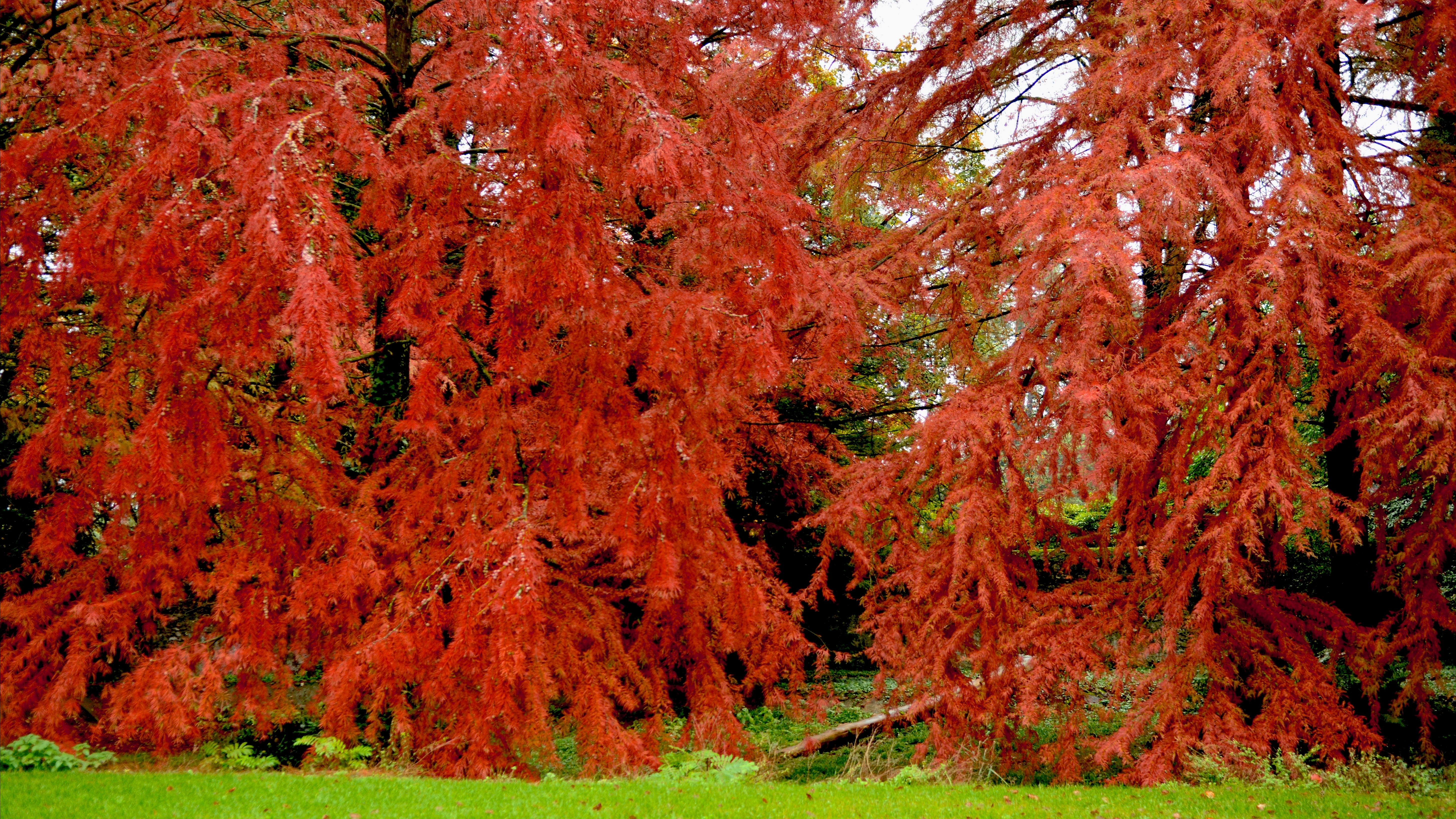
Quite removed from all these colour changes are many magnolias, willows, planes, alders, hazels, Dove and Judas trees, all of which remain largely unchanged. Most ashes, apart from the Claret ash, change very little before they lose their leaves. Yet in contrast, Dawn redwoods and Swamp cypresses can be towers of rust one day and bare the next. Sizeable specimens of both these two last trees can be seen growing beside each other in Battersea park.