12-Oct October's Jewels Tile Image

12-Oct October's Jewels

Summary

As the last of the summer flowers fade, October’s landscape reveals a new kind of beauty: a dazzling display of fruits and berries. This is the month when nature trades petals for jewels, with shiny, vibrant treasures hanging from every branch. Discover the astonishing diversity of the Sorbus family, whose rowans and whitebeams offer berries in every shade from scarlet red to pearly white. Marvel at crab apples that hang like festive ornaments and learn to distinguish the hips and haws of countless roses and hawthorns. We'll also explore the striking, colourful fruits of the Spindle tree and even seek out rare wonders, like pods of a vivid bilberry blue. It’s a colourful harvest for the eyes.

Article

Fruits and Berries

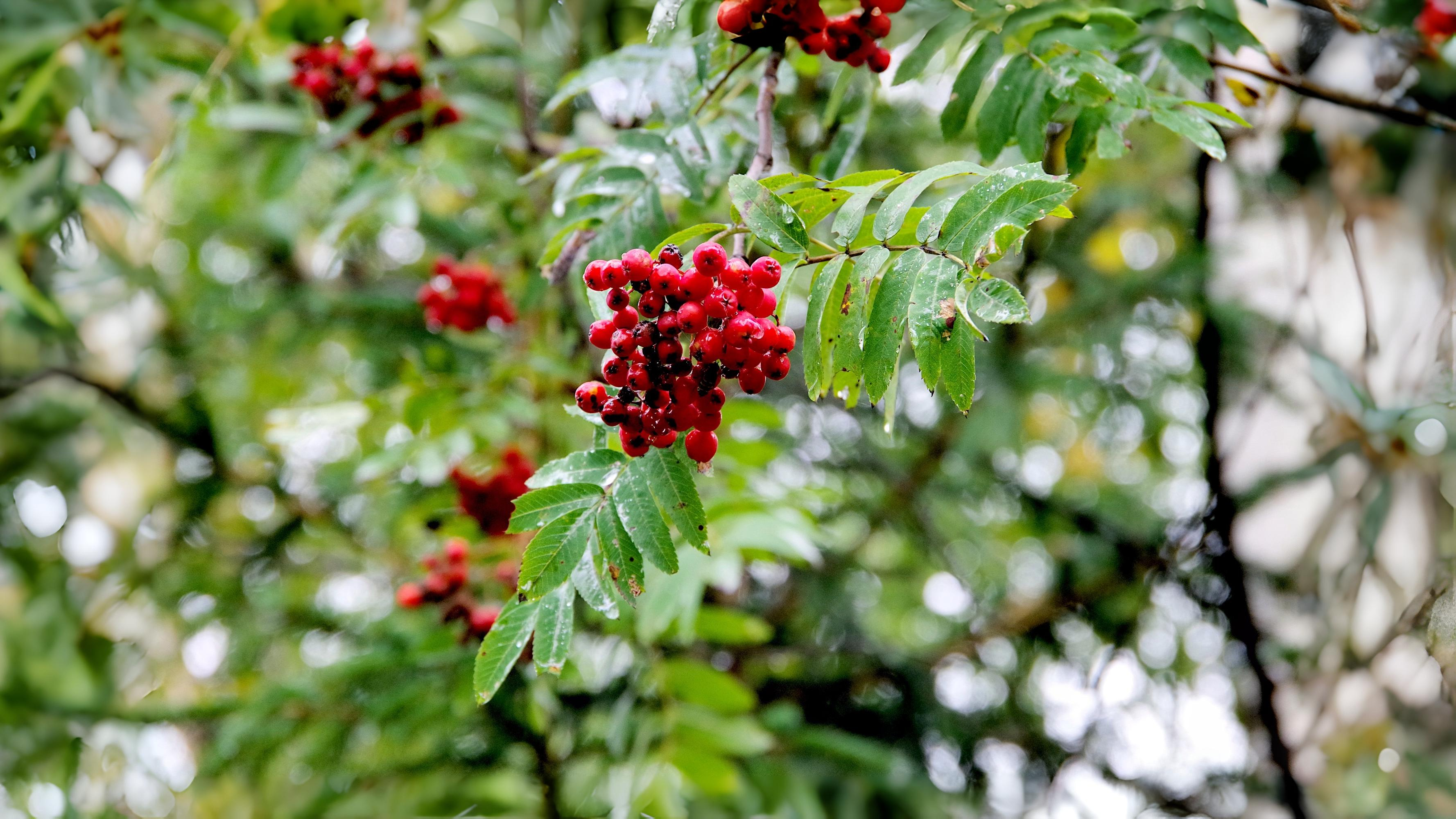
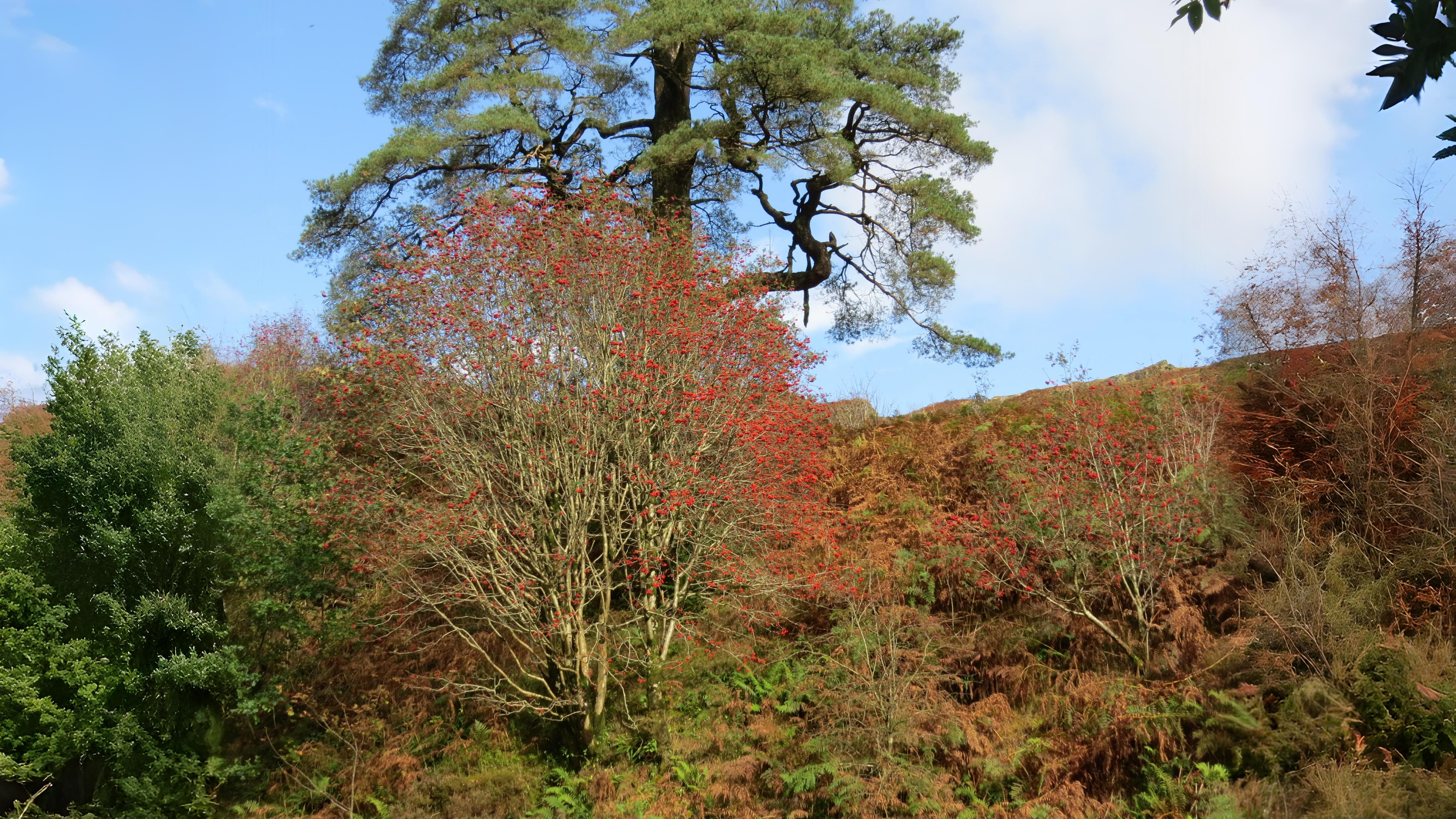
October is the month when the colour provided by flowers gradually gets replaced by the colours of different fruits and berries. The palette of colour is smaller but berries make up for it by often being shiny, which flowers rarely are. By now many of the softer fruits will have been eaten by birds and squirrels who can be seen running with various nuts in their mouth. Just walking around the streets of London it is the rowans and whitebeams that are noticed most. Although they look quite different, rowans with pinnate leaves and whitebeams with entire ones, they are both species of the genus Sorbus.

12-Oct October's Jewels Section Image

12-Oct October's Jewels Section Image

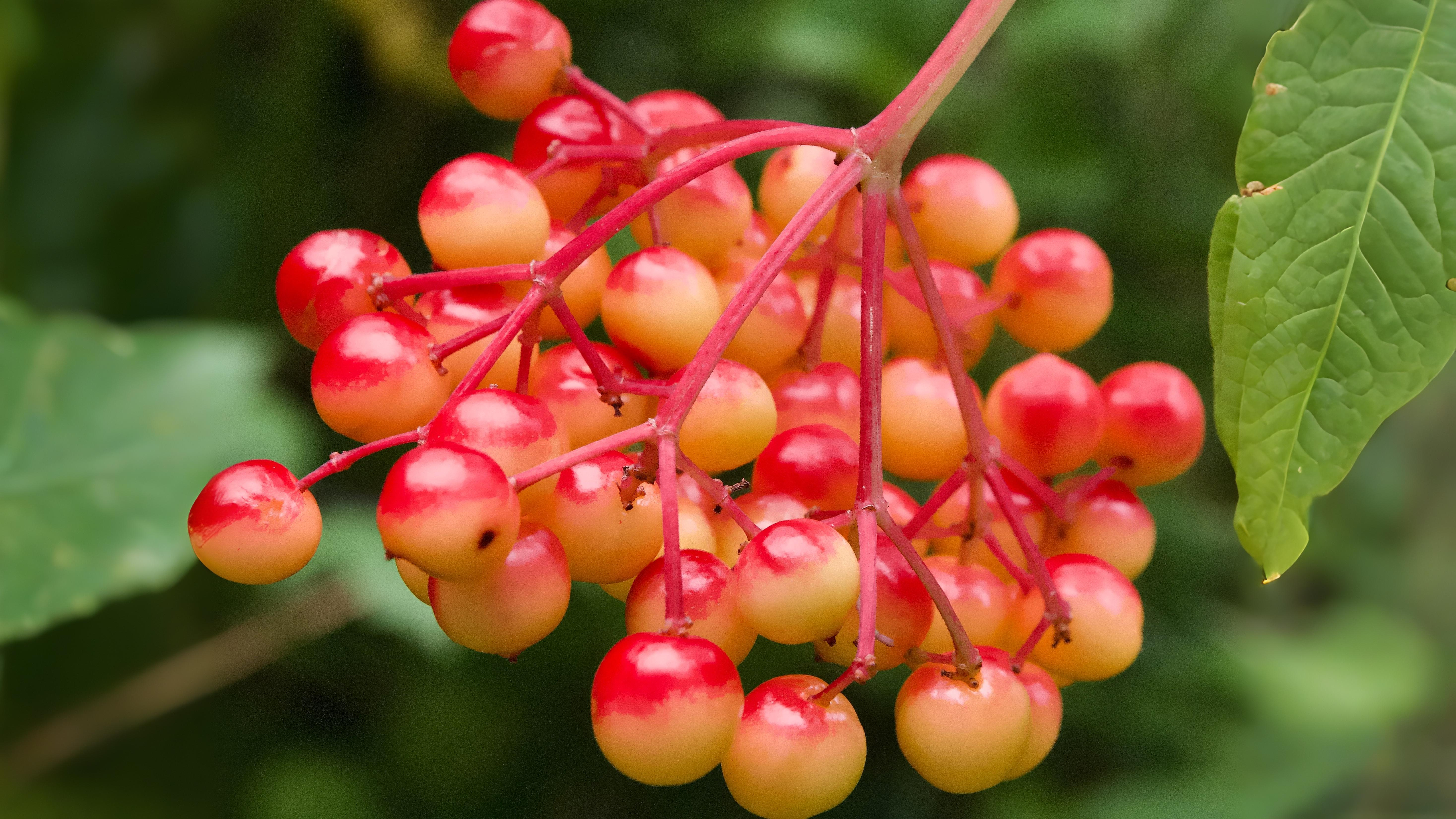
There are almost fifty species of Sorbus, many of which are highly promiscuous. This explains why there seems to be a tree with bright red berries almost everywhere in October. Not only do they hybridise but some Sorbus spp. have a tendency to double or even treble their chromosomes. Besides all this variety, gardeners are endlessly selecting new cultivars for bigger, brighter and more varied berry and leaf colour.

12-Oct October's Jewels Section Image

12-Oct October's Jewels Section Image

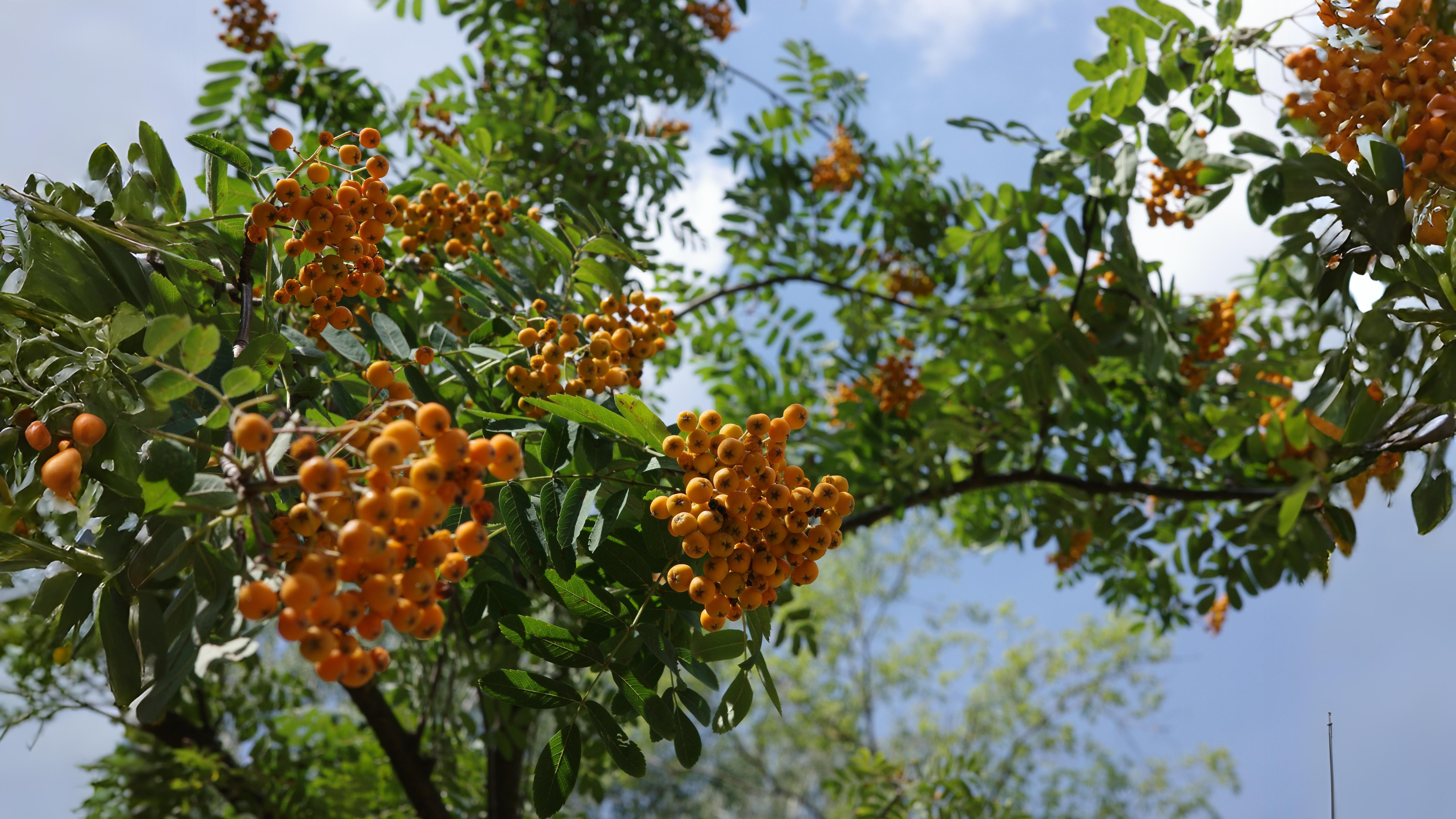
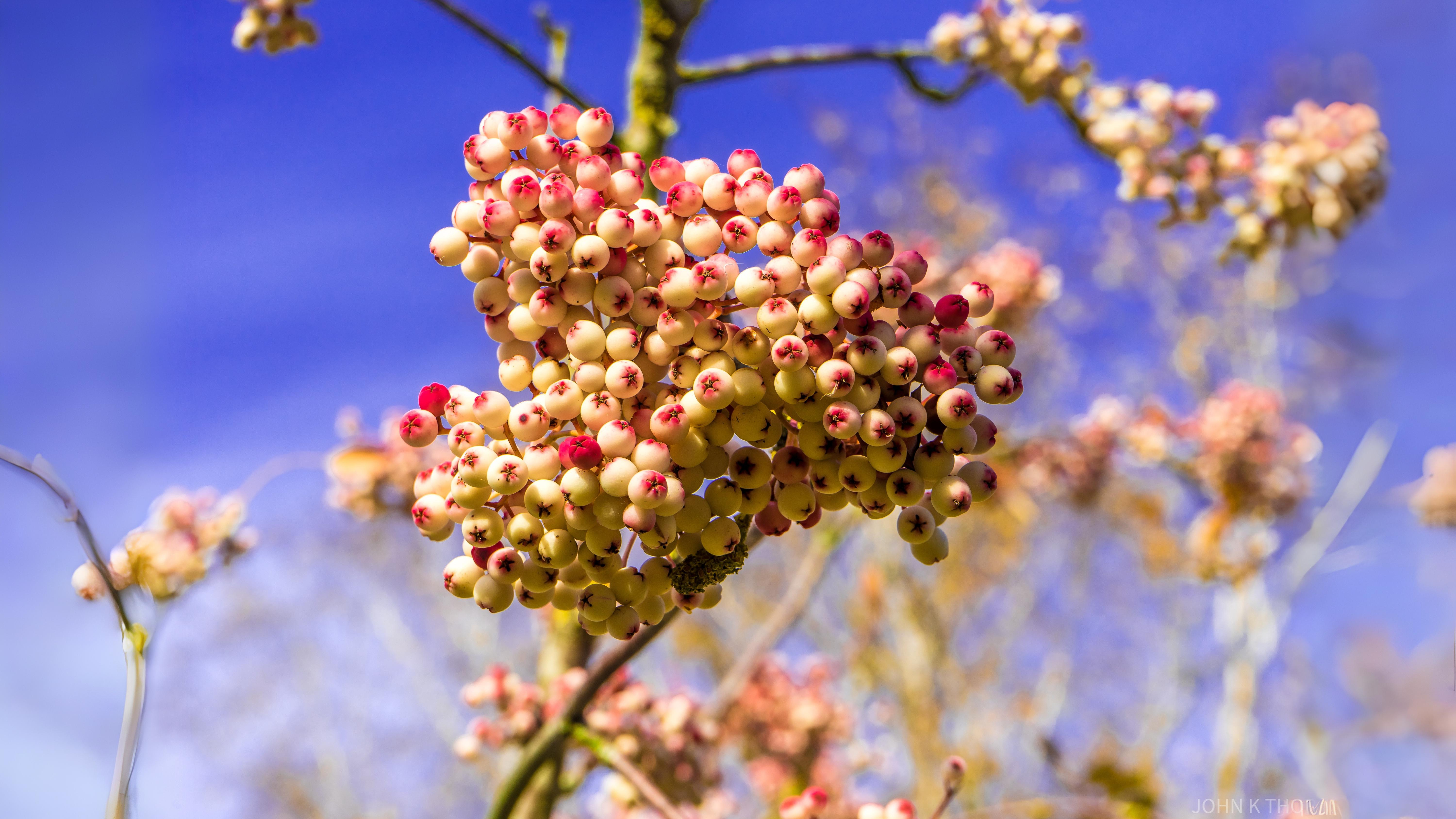
Some of the more commonly planted Sorbs in our streets are the Chinese Scarlet Rowan Sorbus commixta ‘Emblem’ which has scarlet and orange berries, the Hupeh Rowan S. Hupehensis which has pink and white berries and the Kashmir rowan S. cashmiriana whose berries are either white or amber.

12-Oct October's Jewels Section Image

12-Oct October's Jewels Section Image

Others seen regularly include the Service Tree of Fontainbleu S. latifolia (red berries with brown dots), the Swedish Whitebeam S. intermedia (orange-red berries), Sargent’s rowan S. sargentii (orange berries), S. ‘Winter cheer’ (cadmium yellow berries which become orange-red) and S. vilmorinii (rose-coloured berries which fade to purple and white). Sorbus aucuparia var edulis is also sometimes planted as many believe it is the best one for making rowanberry jelly, having larger and more plentiful berries than most of the others. The berries on whitebeams are often not quite as noticeable as those on rowans. This is because their leaves often cover the berries which are usually much duller in colour. The berries themselves tend to be larger, longer and often covered in small dots. Some of those we do notice are Sorbus aria ‘Magnifica’ and ‘Majestica’ both of which have red berries and S. a. ‘Lutescens’ whose fruits are more like orange-red cherries. All three of these are regularly planted in our streets as is S. x arnoldiana Schouten which has golden yellow berries.

12-Oct October's Jewels Section Image

12-Oct October's Jewels Section Image

There is also a hybrid of our two most common wild Sorbus spp., the native rowan S. aucuparia and the native whitebeam S. aria which come together to form S. x thuringiaca which has the unfortunate name of the Bastard Service tree. In its fastigiate form it can be found in many London streets, now sporting almost holly-like berries.

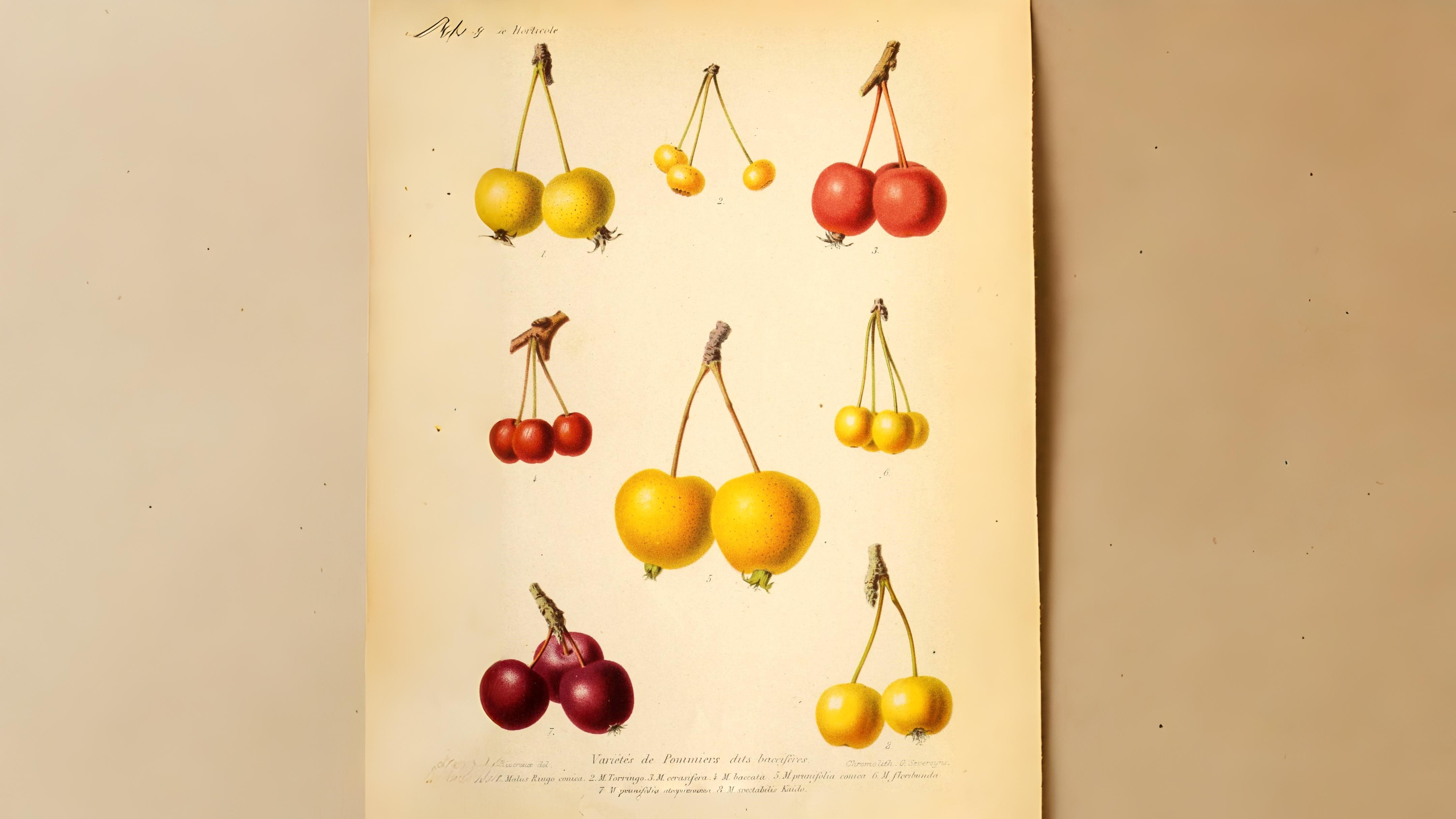
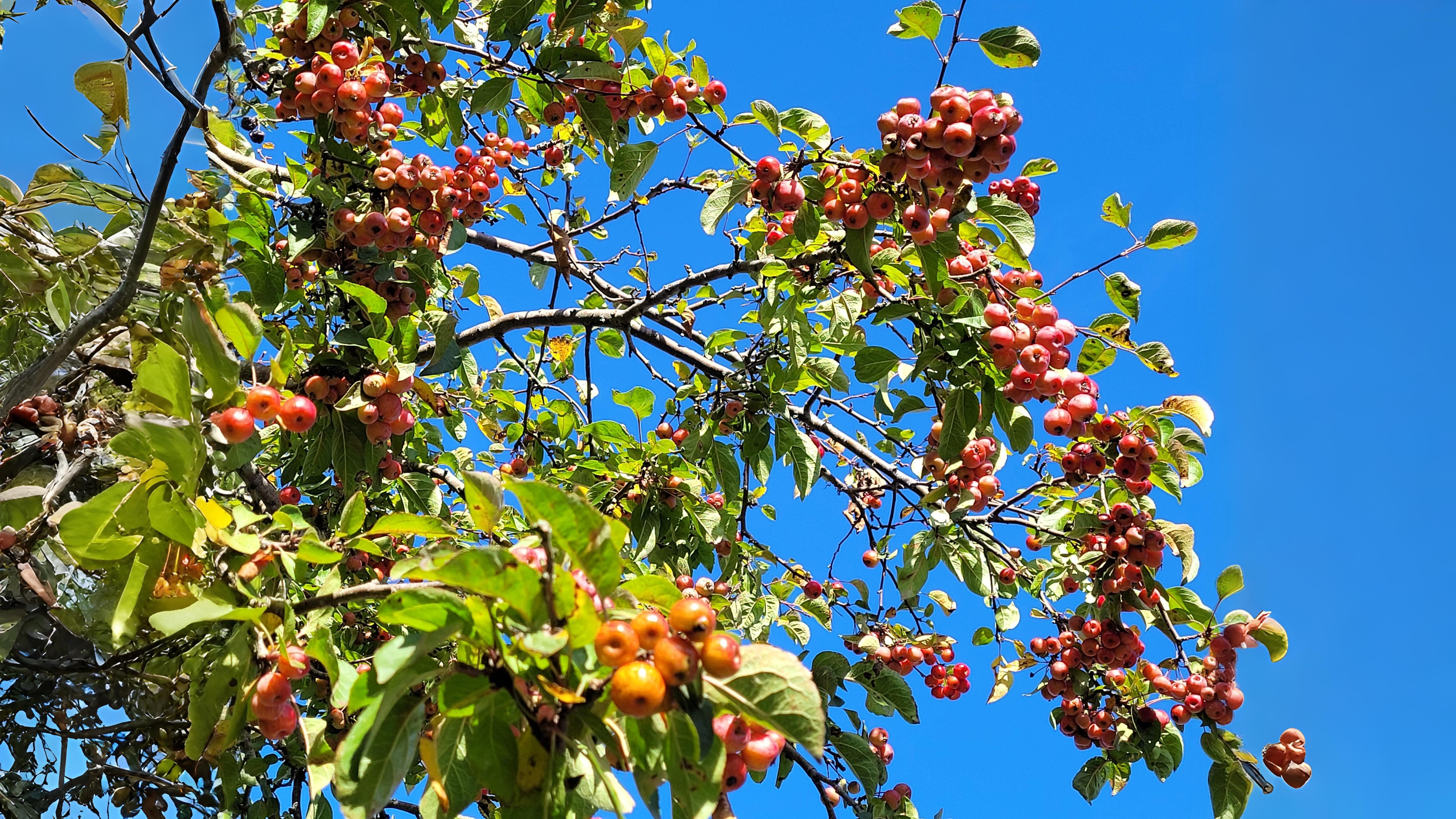
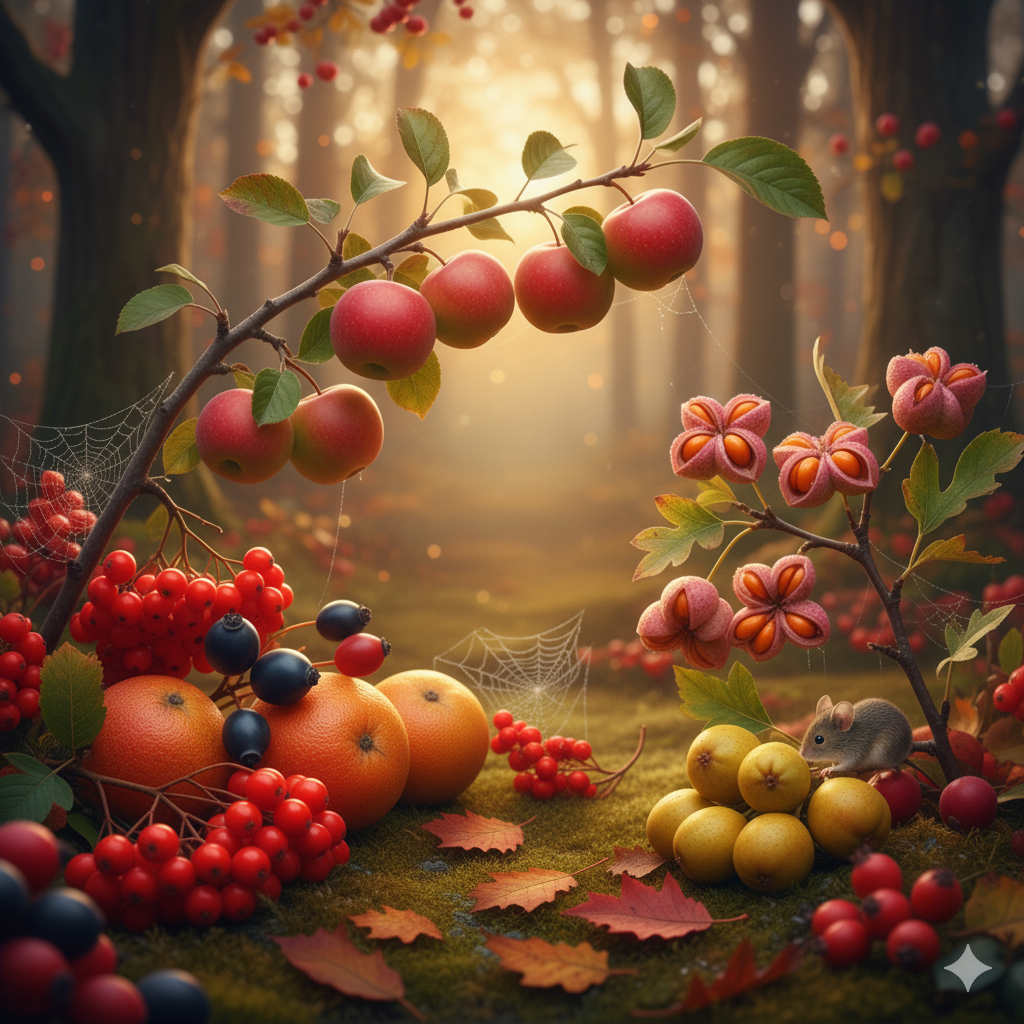
Another fruit we notice a lot this month are apples, often seen as windfall beneath trees in hedges, especially around the outskirts of London. More centrally it is the brightly coloured fruits of the flowering crab apples, which hang like Christmas decorations, that tend to catch our attention.
12-Oct October's Jewels Section Image

12-Oct October's Jewels Section Image

Popular varieties with distinct colours to aid identification include Malus ‘Van Eseltine’ which has vivid pink apples, M. ‘John Downie’ (scarlet and orange), M. ‘Red Sentinel’ (dark red), M. Profusion (blood red) and M. ‘Evereste’ which has two tone fruits rather like tiny ‘Gala’ apples. The first three of these can be seen in the crab apple collection at Wisley along with a host of rarities such as M. sieboldii whose apples are sometimes white and M. kansuensis which has unusual fruits, almost the colour of peaches and cream.

12-Oct October's Jewels Section Image

12-Oct October's Jewels Section Image

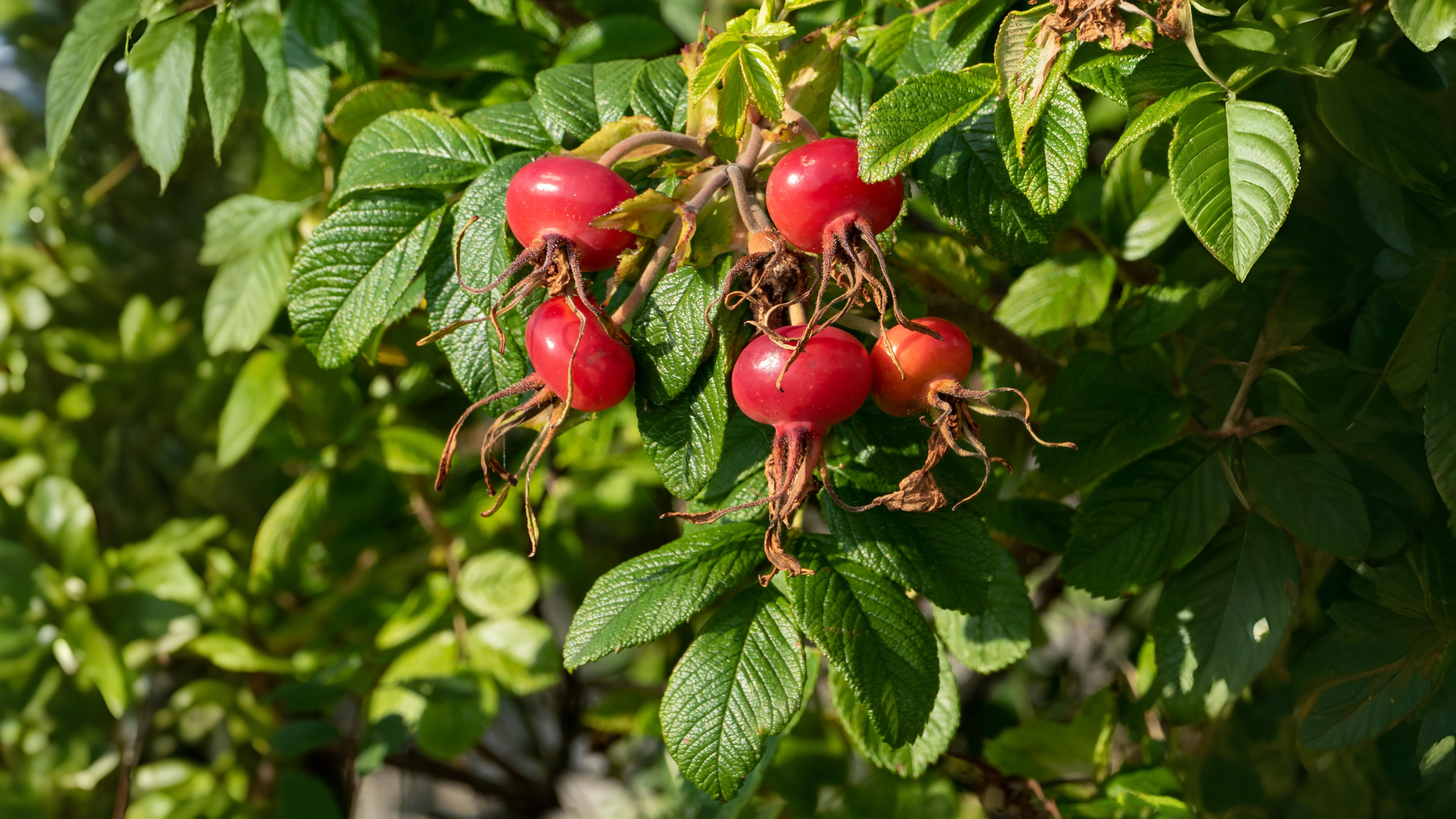
Other small red fruits covering the landscape are the endless hips and haws of roses and hawthorns. The hips of our wild dog rose Rosa canina tend to be more egg-shaped than the round hips of the field rose R. arvensis. In gardens there is a much wider range of rosehips. The rugosa roses have hips which almost look like small tomatoes.

12-Oct October's Jewels Section Image

12-Oct October's Jewels Section Image

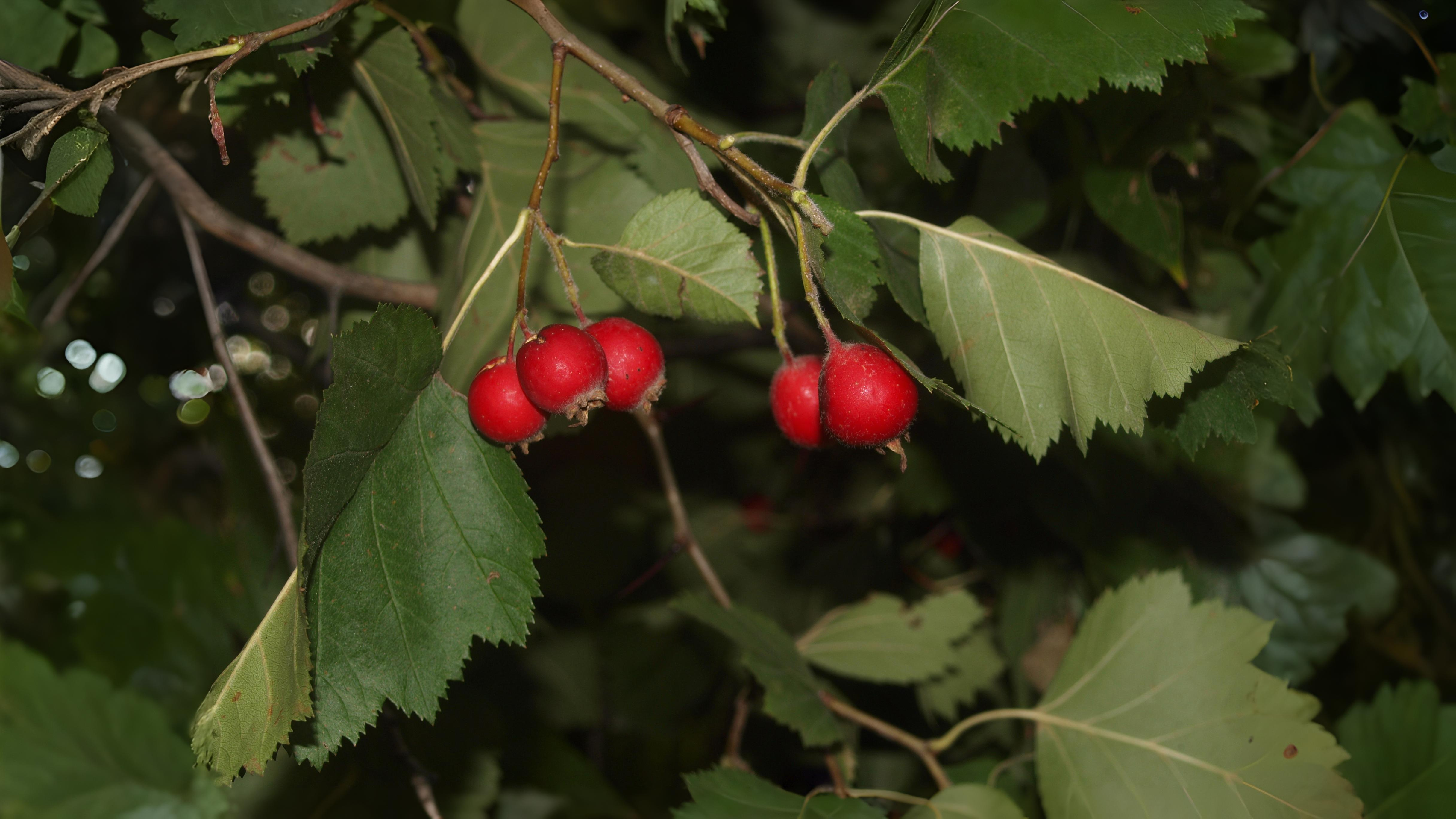
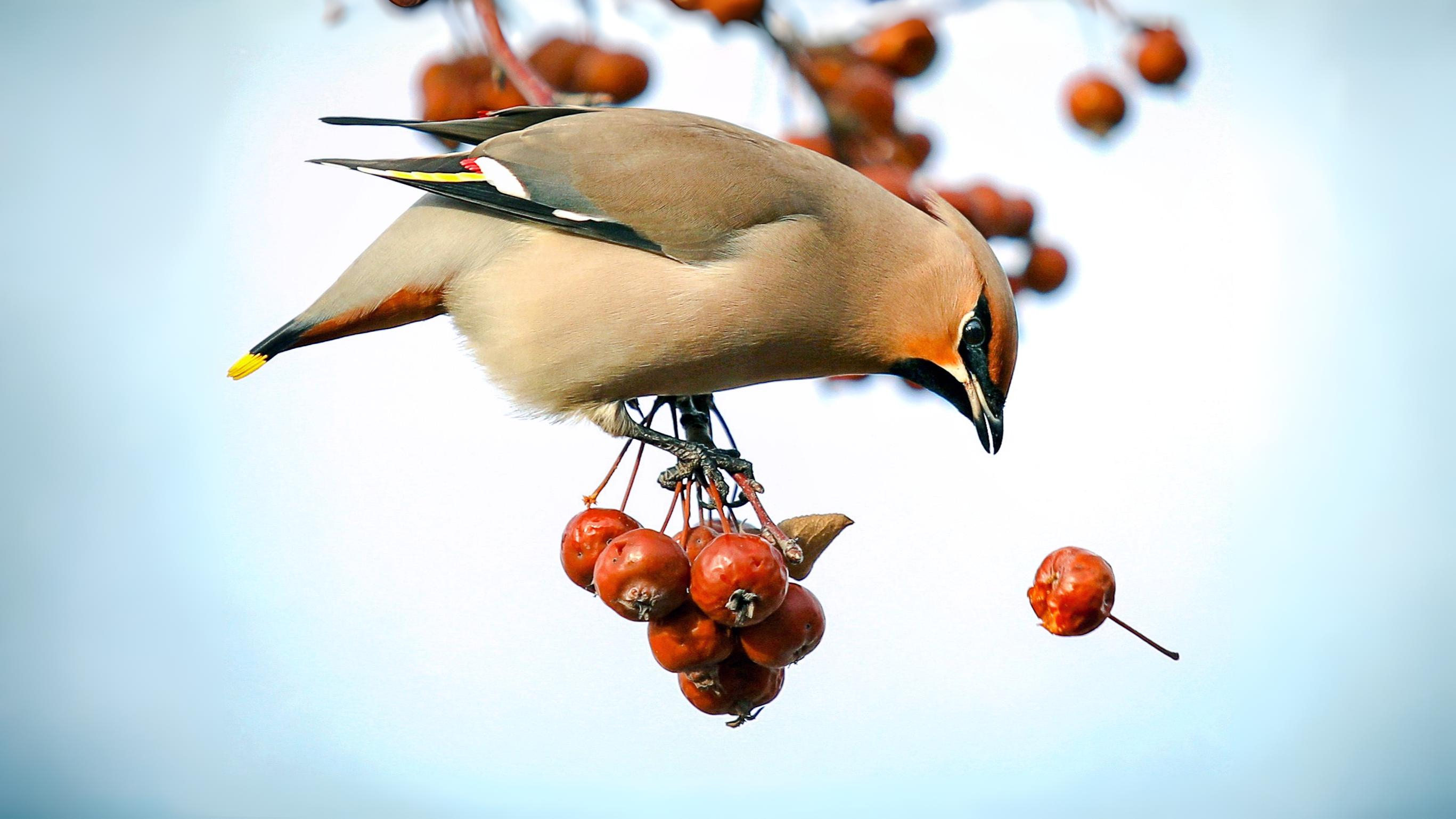
Rosa moyesii is usually planted purely for its scarlet, amphora-shaped hips. The Hybrid Musk roses often have pinkish grey hips and those of Burnet roses are a shiny black. The strangest of all are probably those of Rosa roxburghii which look like miniature horse-chestnut fruits. Wild hawthorn berries are also ubiquitous now and responsible for the arrival of many of our winter migrants. Hawthorn berries from foreign species in gardens tend to be much more showy, especially the American hawthorns e.g. Crataegus pedicellata which has pear-shaped fruits and those of C. persimilis ‘Prunifolia’ which are noted for their size and the length of time they remain on the tree. Visiting redwings and fieldfares are said to show a preference for the yellow-berried forms e.g. C. punctata ‘Aurea’. In the hawthorn collections at Kew and Savill Gardens it is worth looking for the rarer black-berried C. songarica and C. monogyna ‘Flexuosa’ which also possesses corkscrew branching.

12-Oct October's Jewels Section Image

12-Oct October's Jewels Section Image

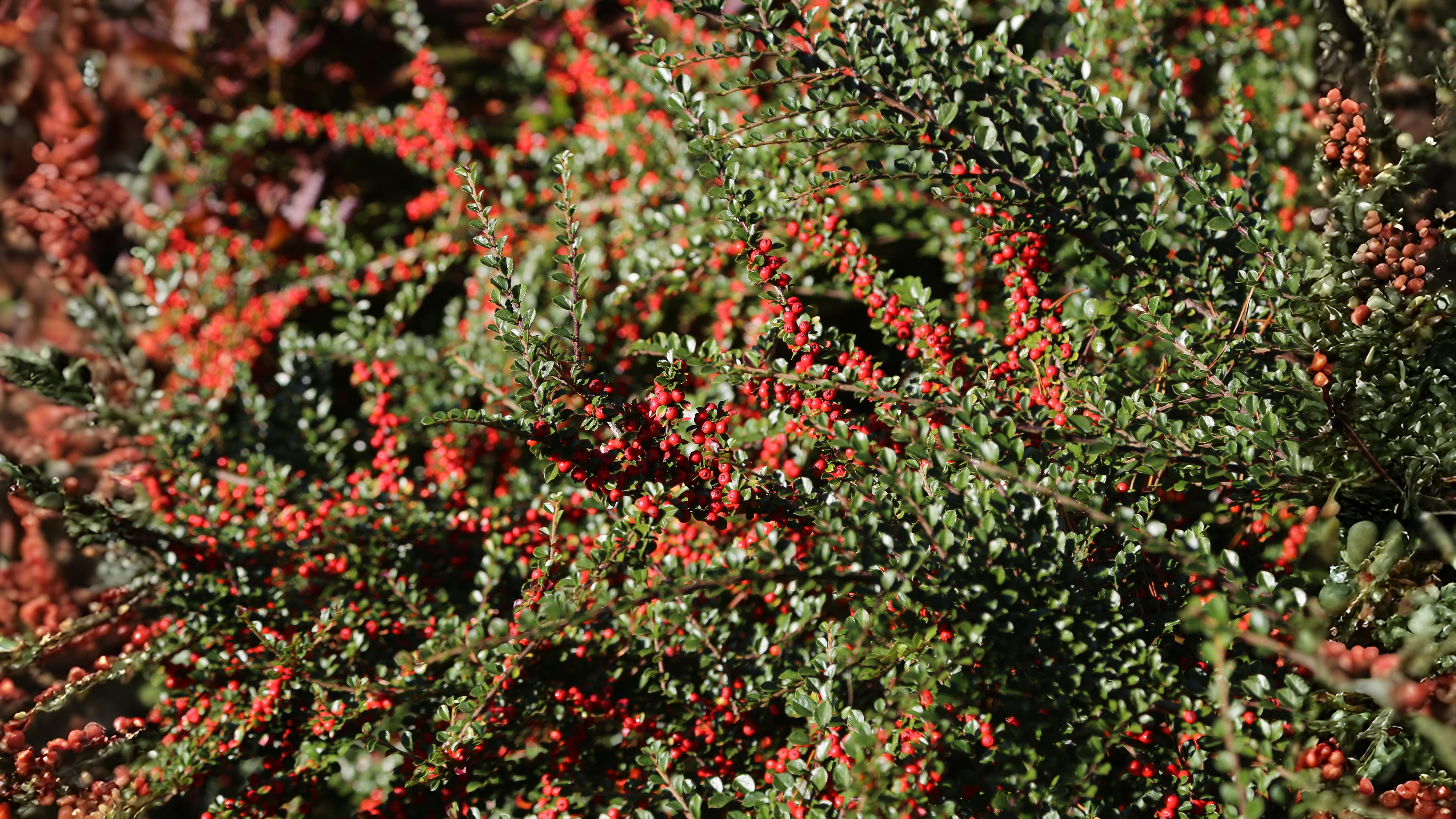
Cotoneasters are yet another large and varied group of shrubs and trees now carrying red berries. The most easily recognised are the cascading sheets of berries on Cotoneaster horizontalis which is often planted beside walls.

12-Oct October's Jewels Section Image

12-Oct October's Jewels Section Image

However, Cotoneasters, of which there are 400 or more species, also come as trees, hedges and even weeping standards as well as ground cover. Cotoneaster salicifolius, C. amoenus and C. glabratus can all attain the height of a small tree. Others are either known for large berries e.g. C. x watereri John Waterer, yellow berries e.g. C. ‘Pink Champagne’ or black berries e.g. C. transens.

12-Oct October's Jewels Section Image

12-Oct October's Jewels Section Image

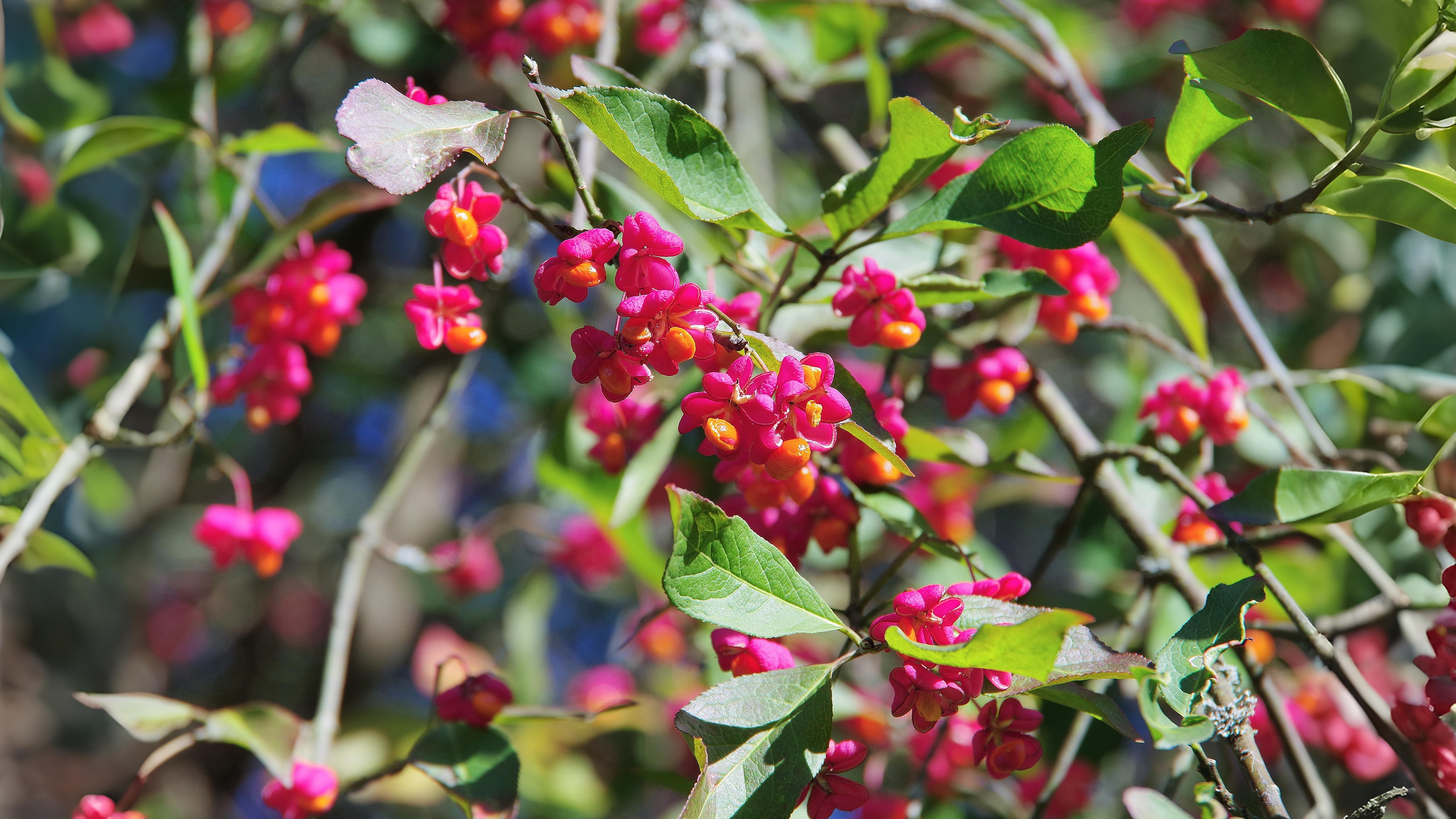
Spindle fruits Euonymus spp. also stand out this month. They often have black or white seeds covered in orange-coloured flesh which in turn is surrounded by either a red, pink or orange capsule. Whatever the combination of colours, the fruits of spindles always stand out, none more so than Eunoymus cornutus var. quinque cornutus which goes the distance having Schaeperalli pink capsules with horn-like extensions, making them look like miniature jesters’ hats. These then split to reveal their startling vermillion fruits.

12-Oct October's Jewels Section Image

12-Oct October's Jewels Section Image

Rare, more unusual fruits at this time of year include those of Akebia trifoliata, Holboellia latifolia and Stauntonia purpurea all of which can be purple and Decaisnea fargesii, which has pods that are a vivid bilberry blue covered in a delicate, pale, reticulate pattern. The trumpet flowers of the giant woodland lily Cardiocrinum giganteum, which is occasionally seen in collections, give way to upward turned capsules which look not unlike small open mouths barred with teeth.

12-Oct October's Jewels Section Image

12-Oct October's Jewels Section Image